
Champaign Police Blotter Availability
Champaign County simply has no official booking log. Nothing weekly, rolling, or 72-hour exists. The Tri-County Regional Jail portal shows live custody only, never history. Urbana posts monthly statistical categories, and Mechanicsburg has a publicly indexed July 2022 blotter. Neither one works as a current multi-day feed. Tri-County serves Champaign, Madison, and Union Counties. A name on that regional roster is not automatically a Champaign arrest, so confirm the arresting agency before you call it one. When an entry vanishes, the portal names no archive destination and gives no reason.
Trace Champaign Arrests Across Days
No single multi-day page exists. Build the time line from the offices that hold each piece, keeping agency, custody, and court facts separate.
- Check Tri-County for present custody and note the search time.
- Identify the sheriff, Urbana Police, Mechanicsburg Police, or other arresting agency.
- Request its incident or arrest record for the date range.
- Use Municipal Court or Common Pleas records to follow the case.
- Ask for the retention schedule if an older record is unavailable.
Fresh arrests in Champaign County? The Arrests Last 24 Hours route answers that, not a historical search.
Champaign Arrest Record Layers
Champaign County defines no official local log format. Useful arrest facts come from distinct source layers instead.
| Layer | What to verify |
|---|---|
| Regional roster | Name and current Tri-County custody; populated fields and photo display were not audited. |
| Agency record | Incident, arresting agency, date, and case number. |
| Booking record | Identity, intake time, booked charges, facility, and release terms when maintained. |
| Court docket | Filed charge, arraignment, bond order, later entries, and disposition. |
| News | Event reporting, not a complete list or final outcome. |
Not every custody roster displays booking photos. The Tri-County roster makes no promise either way, so check the portal directly.
Champaign Weekend Arrest Timing
No official source states a weekend or holiday posting rule. A date on a news site may be publication time. It could also be ingestion, booking, or arrest time. Those moments differ. The roster's 30-minute refresh label has a limit. It does not mean a new arrest appears within half an hour. Check present custody first. Then contact the arresting agency when its records office opens and follow the right court docket. The clerk warns that online data can trail filings or judicial action by at least 24 hours. Sometimes the lag runs longer.
Champaign Arrest Archives and Retention
Champaign County publishes no sheriff-approved retention period for booking records or photos. The current roster explains no roll-off either. Release from custody does not erase an arrest record. Ask the office directly. The Sheriff Records Division takes narrow requests, and so does the arresting police agency. Include name, date range, agency, and facility. Add any known case or booking number, plus the format you want. If destruction is reported, ask which approved schedule and disposal record apply. Ohio uses RC-1 for one-time disposal, RC-2 for a continuing schedule, and RC-3 to document disposal. None proves a Champaign retention period.
Note: Court files follow separate custody rules and can remain after a live jail entry disappears.
Local Champaign Blotter Evidence
Mechanicsburg's July 2022 blotter proves one thing only. That village published arrests then. It is not a daily series. Urbana's statistical page lists monthly categories including criminal arrests, but its posted reports run older. St. Paris materials speak to sheriff coverage and hold no archive. A blotter tracks agency activity, while the Tri-County roster tracks present regional custody, so the two differ in scope and timing even for one person.
Note: The dated Mechanicsburg artifact proves past publication only; it does not establish a current village or county schedule.
Champaign Arrest News Patterns
WHIO's Champaign arrest coverage illustrates event-driven reporting based on a law-enforcement incident.
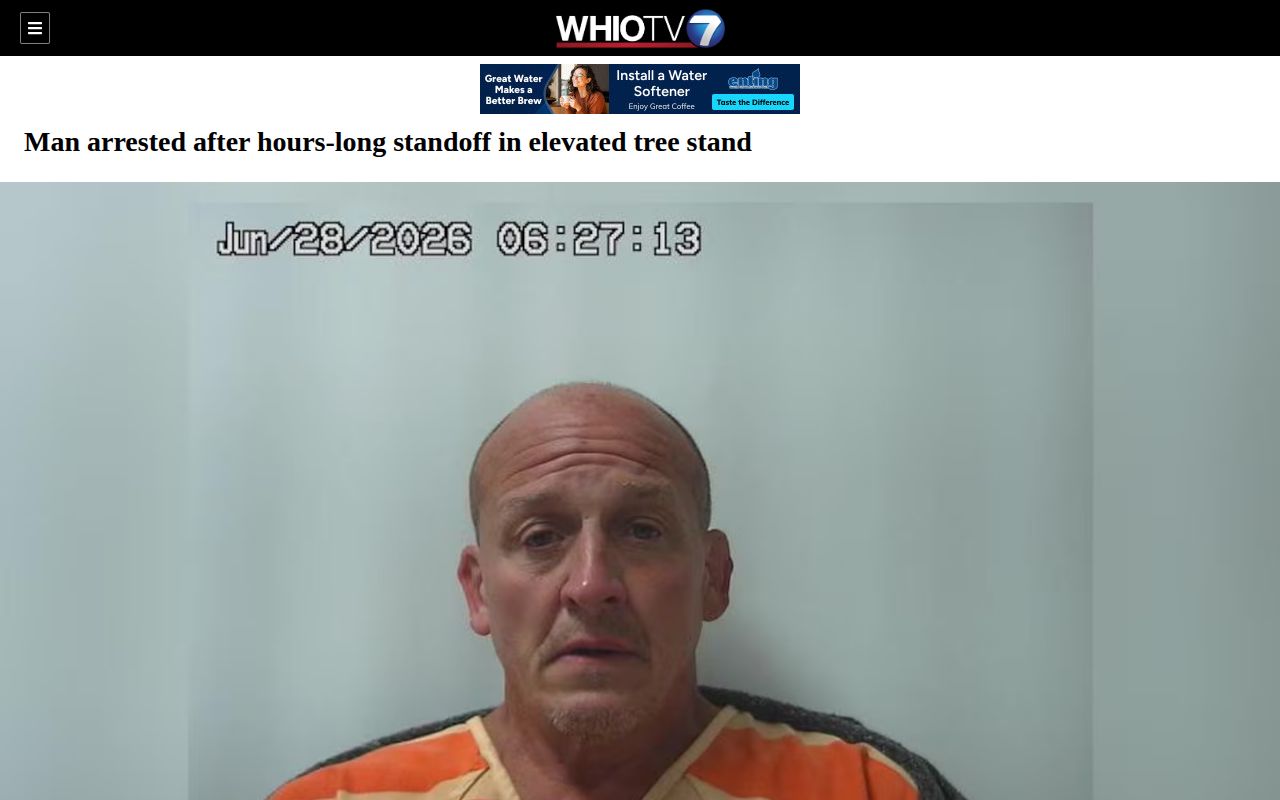
One article covers one event. It is context, not a complete blotter or final court record. The RecentlyBooked Champaign page offers an unofficial rolling archive of bookings.
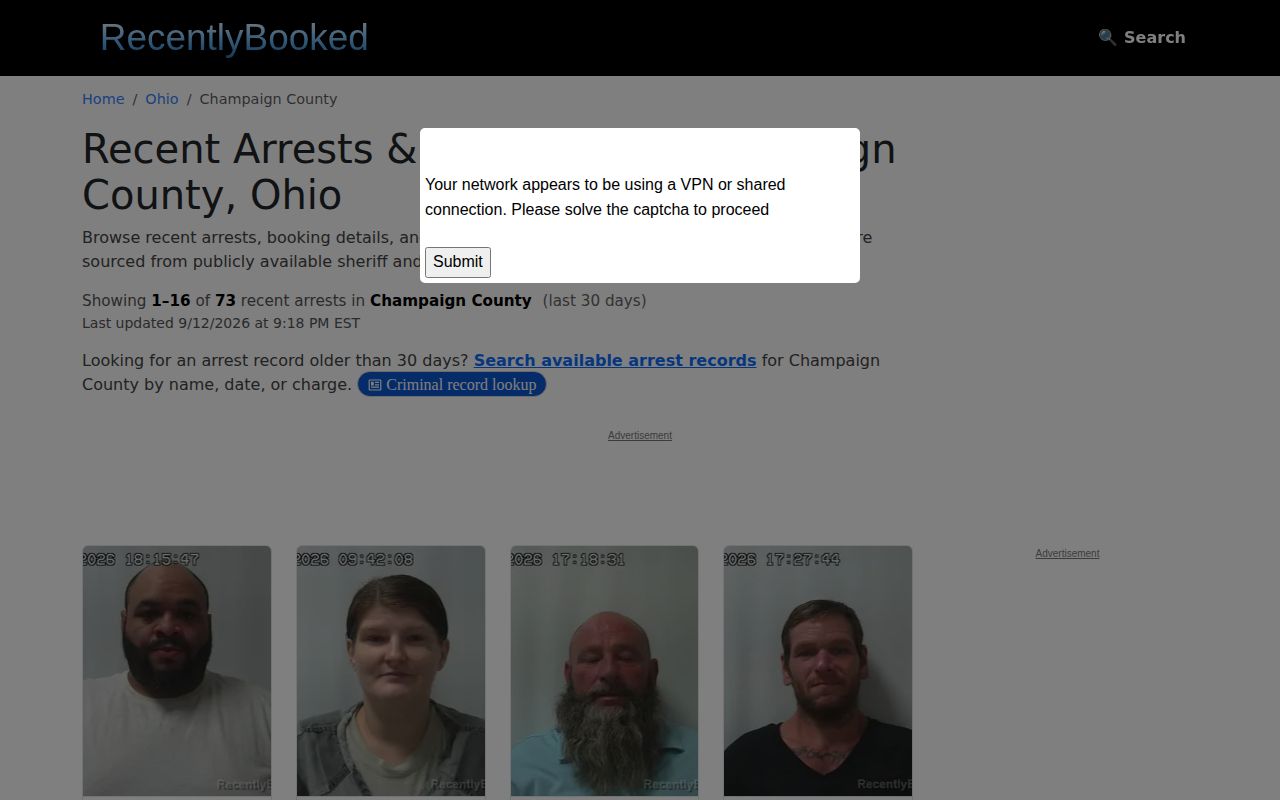
Private archives can mislead. Entries may lag, go stale, or name the wrong person, so verify them officially. The Mugshots.com Champaign section counts as another unofficial historical source.
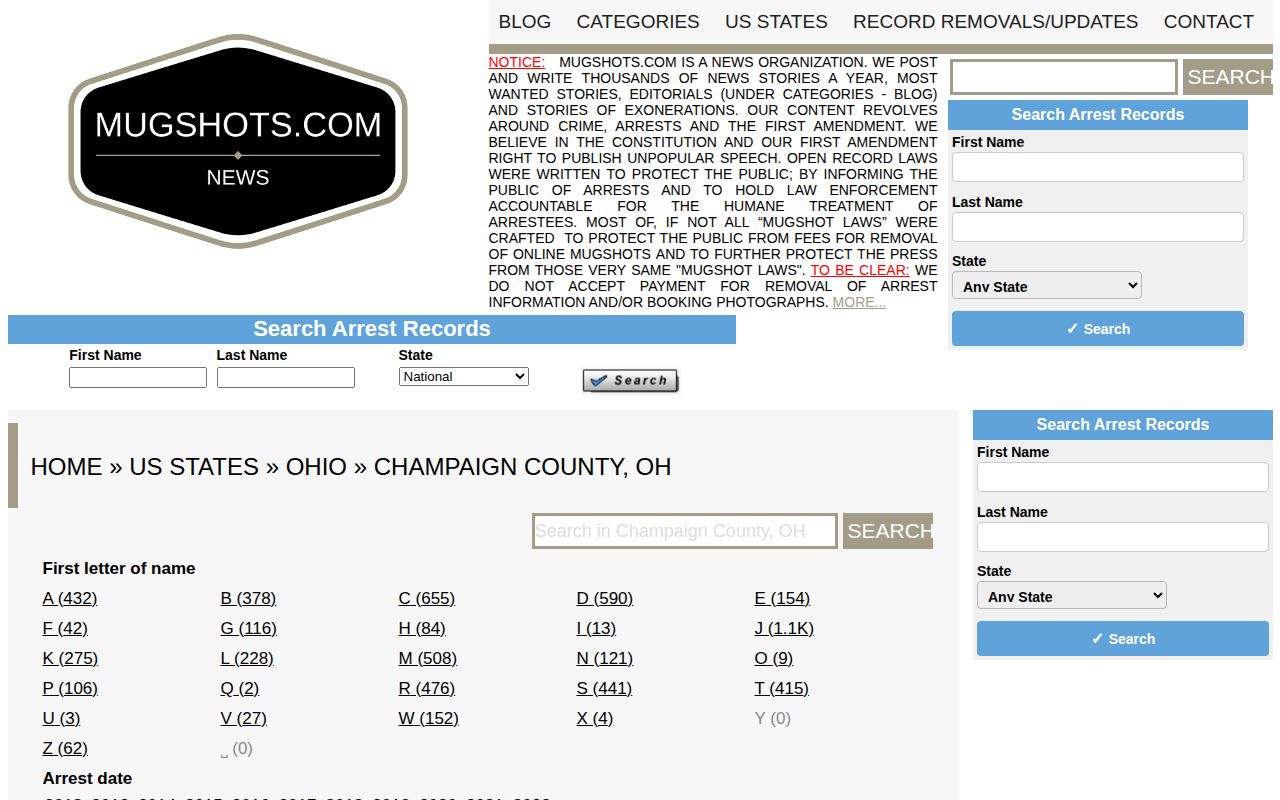
Its archive depth cannot establish present custody or the disposition of a charge.
Champaign Arrest Log Court Clock
A multi-day arrest search often crosses a court date. Champaign County Municipal Court holds criminal and traffic arraignments Monday, Tuesday, Wednesday, and Friday at 9:00 a.m. It also publishes bond schedules. That calendar explains why court activity clusters on certain days. Not every booking hits the next session. Check an individual bond condition in that person's court record. Common Pleas handles adult felonies, while Municipal Court covers the countywide criminal and traffic layer.
The Clerk legal search carries its own warning. Online data may trail filings or judicial action by at least twenty-four hours, sometimes substantially longer. So a roster entry, a booked charge, a filed charge, and a later disposition can disagree for legitimate timing reasons.
Keep every timestamp tied to its source. Arrest time marks the agency event, while booking time marks intake at the facility. Publication time belongs to a news or private page. A docket timestamp marks a court filing. Blend them into one posted date and you build a false chronology, especially across a weekend. Champaign County arrest research rewards that discipline.
Note: A published bond schedule is general court guidance, while the person’s docket controls the actual release condition.
Champaign Sheriff App Blotter Limits
The "Champaign County Sheriff OH" app posts public-safety news, crime reports, and tips. It is not a booking log. No jail roster lives there, no photo feed, and no deep archive either. An app notice or a social media post can still help you spot an incident worth chasing down in Champaign County. Treat it as a lead. A lead is not the record itself. Present confinement sits with Tri-County, the incident report with whichever agency responded, and court action with the proper docket. Keeping those lines straight pays off. It stops one safety announcement from standing in for every arrest made that week in Champaign County.
Champaign Warrant Entries Need Verification
Champaign County has no single official warrant portal. Urbana does run a most-wanted page, though its public view offers no current list, no posting schedule, and no entry fields to search. So a warrant mentioned in a blotter needs checking. Call the issuing court. Ask an attorney if the stakes are high. Municipal and felony matters often travel different court paths, and the court that issued the order controls it. Sheriff records or dispatch can point an inquiry the right way. Never approach a wanted person yourself. Emergencies go to 911; quieter tips go to official dispatch channels. Verification exists to resolve a warrant safely, not to dodge one.
Request a Champaign Arrest Log
The sheriff's Records Division takes arrest record requests online or by downloadable form. The public counter is open Monday through Friday, 8:00 a.m. to 4:00 p.m. The form asks for the incident location, a case number, and supporting details. No fee for booking records was published. Response times are not guaranteed either. Ohio public-records law demands prompt, reasonable access, though exemptions and redactions still apply.
Narrow your ask to a tight date span. Name the person, the arresting agency, and the facility you suspect. Add the incident location and any case or booking number you hold. Want photographs? Request them as a separate record item. The office may tell you another agency or a court is the true custodian of the Champaign County arrest document. That routing beats trusting a private archive as the county's permanent log.
The court path depends on the charge. Municipal Court covers the countywide municipal criminal and traffic layer. Common Pleas takes adult felonies. The Clerk of Courts legal search opens those dockets online. A case can run long after a person walks out of Tri-County. The docket also shows what the prosecutor actually filed. It shows how a judge resolved it, which a bare booking entry never will.
Local news plays a different role. WHIO, the Urbana Daily Citizen archive, and the Springfield News-Sun cover notable arrests, public-safety announcements, and later court developments. None runs a complete recurring Champaign County mugshot or arrest feed. Publication choices skip routine cases. Story photos are never assured. Read them for context, then go back to the official record.
The regional jail adds one more wrinkle. Tri-County holds people from three counties. The facility name tells you neither where the arrest happened nor which agency owns the report. Agency labels on unofficial pages get abbreviated or normalized. Confirm the full agency name before mailing anything. Urbana Police and Mechanicsburg Police keep their own record paths, while current St. Paris material points toward sheriff service. That distinction decides where the most useful incident document sits.
Older entries demand date discipline. Save the URL, the publication date, the name spelling, and the stated agency from any secondary item. Never copy its claims into a request as settled fact. Give the custodian enough detail to locate a real record. When a court case surfaces, compare its filing date and charge text with the booking item. Intake labels and filed charges can differ, so do not assume every field should match.
Photo availability deserves the same restraint. Ohio Courts Network reports that Tri-County regularly supplies data and mugshot updates to its justice network. The public roster's photo display sits behind a security gate. A photo on an unofficial archive proves nothing. It may never have appeared on the official roster, it may be stale, and the person may be long gone. When the booking photograph itself is the record you want, ask the custodian.
Do not treat an unofficial archive's date links as a county retention rule either. Private sites set their own display and update habits. The real records question has two parts. Does the sheriff, jail, police agency, or court still keep the material under an approved schedule? And does an exemption, sealing order, or redaction block access? That answer belongs to the custodian, never to the mirror.
Public Record Search
Sponsored Results